
The real question behind square vs aviator
Most people comparing square and aviator sunglasses are not choosing between two identical products with different outlines. They are choosing between two different everyday attitudes: a rectangular, modern frame that reads as deliberate, or a vintage-inspired aviator that reads as relaxed. The shape changes how the frame sits against your face, how it pairs with your clothes, and how much visual weight it adds.
Use the comparison below to match the frame to your face and routine, not to chase a universal winner. The catalog evidence for two goodr frames shows how differently the same decision can play out.
Square vs aviator at a glance
- Face shape: Square frames add structure and suit softer or rounder features; aviator frames follow the cheekbone line and suit angular or oval faces. Neither is a rule, but the contrast is the starting point.
- Everyday styling: A rectangular square frame looks modern and graphic; a vintage aviator looks casual and retro. Choose the one that matches the clothes you actually wear on weekdays.
- Fit and movement: Square frames rely on a stable, level fit across the brow. Aviators need the bridge and temples to hold without slipping, especially if you move around. The catalog confirms a no-slip, no-bounce claim only for the aviator example below.
- Lens look: The supplied records show a purple reflective lens on the square frame and a brown non-reflective lens on the aviator. That changes the visual effect more than the shape alone.
Square frame sunglasses fit: structure and a level brow
Square and rectangular frames work best when the top line sits parallel to your brow and the width roughly matches your face at the temples. If the frame is too narrow, it pinches; too wide, and it slides. Because the shape is geometric, small fit problems are more visible than they are on a softer aviator.
For everyday wear, a square frame gives you a clean, modern silhouette that pairs easily with collared shirts, plain tees, and structured jackets. It is the more graphic choice, so it tends to look intentional rather than incidental.
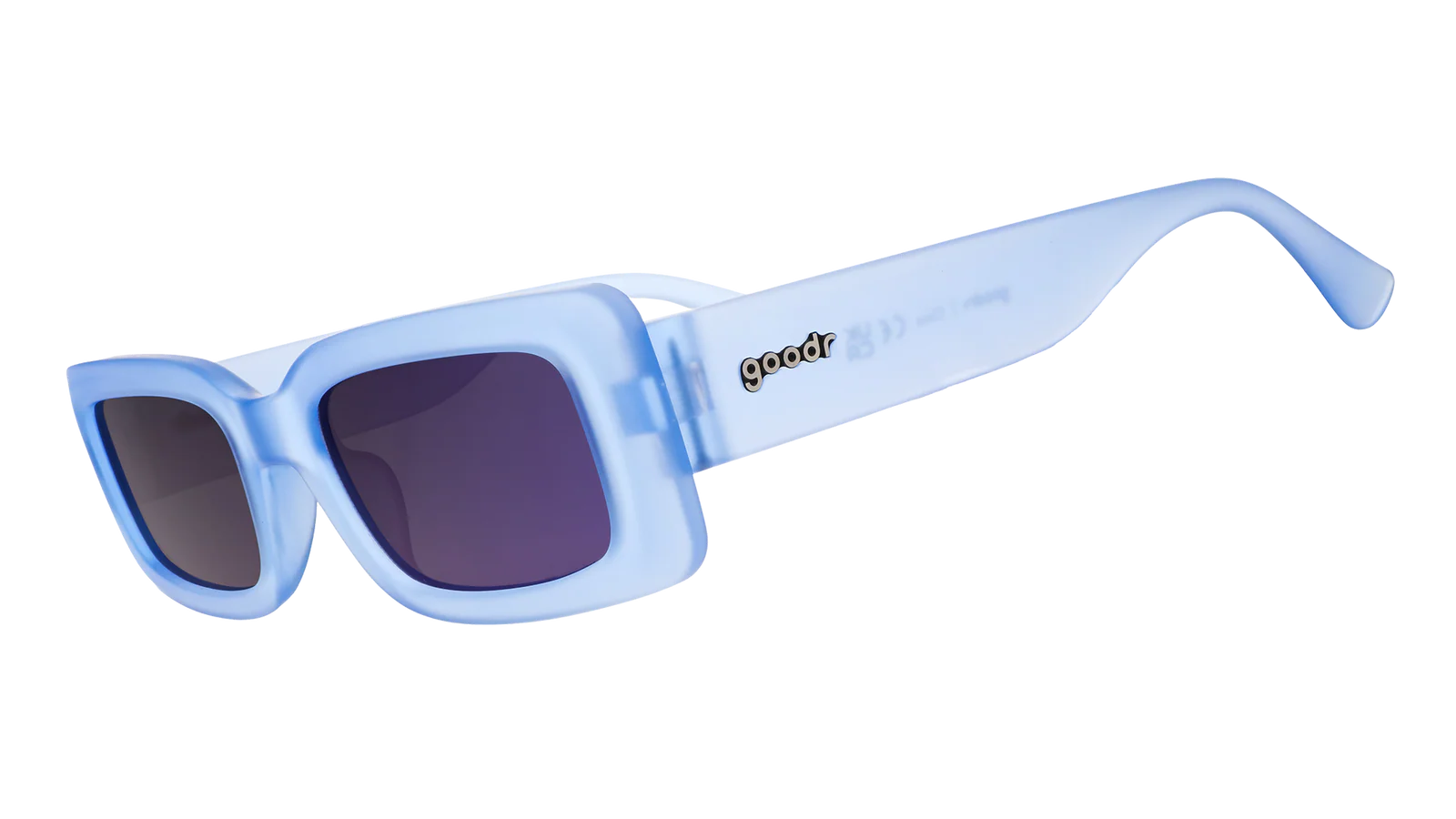
A square option in the catalog: Lost Highway Desert Mirage
- Lost Highway Desert Mirage: Translucent light blue Luxe Gs with rectangular frames and purple reflective lenses. This is a square-leaning frame with a colored, reflective lens, so it demonstrates the more graphic end of the square-versus-aviator decision.

Lost Highway Desert Mirage - Lost Highway Desert Mirage: The catalog describes the frame as made for a sun-soaked escape at music festivals. It signals a social, outdoor use case rather than a performance claim, which is the right way to read the supplied evidence.
Aviator frame face shape: following the cheekbone
Aviators are usually described as flattering on angular or oval faces because the curved lower edge softens strong jawlines and follows the cheekbone. The vintage-inspired square aviator is a hybrid: it keeps the aviator's relaxed attitude but adds a squarer outline, so it can work on people who find a classic teardrop aviator too rounded.
For everyday wear, an aviator reads as casual and retro. It is the easier frame to throw on with denim, a T-shirt, or weekend layers, and it tends to look less formal than a crisp rectangular frame.
An aviator option in the catalog: Threaten Me With a Good Time
- Threaten Me With a Good Time: Light pink vintage-inspired square aviator frames with brown, non-reflective lenses. This is the aviator side of the comparison, with a softer color and a non-reflective lens that changes the everyday look.
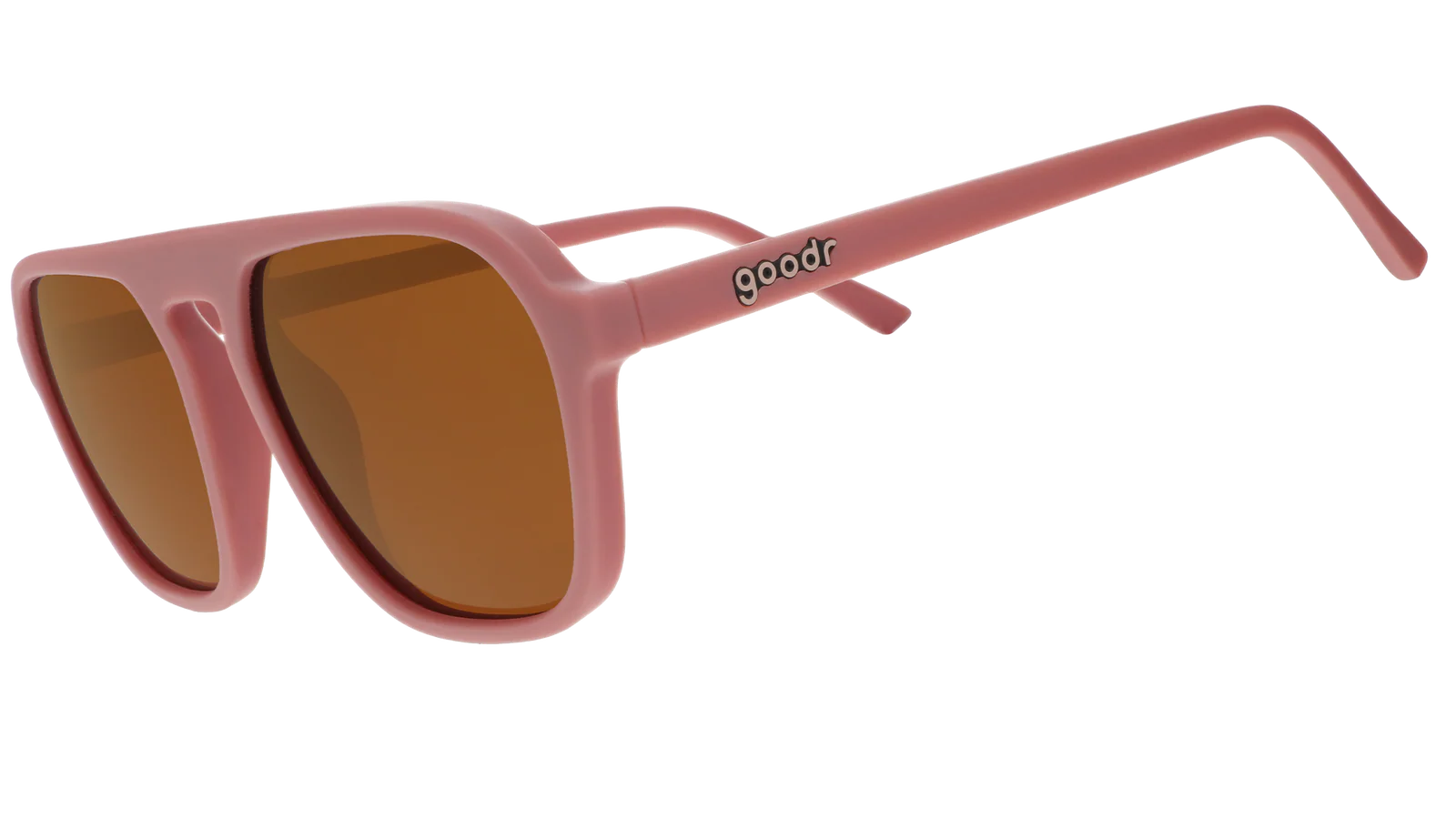
Threaten Me With a Good Time - Threaten Me With a Good Time: The catalog states the frame won't slip or bounce while you move. That is the clearest fit-and-movement evidence in the supplied records, and it matters if your everyday wear includes active moments.
Which sunglasses shape suits me? A practical way to decide
Start with your face shape, then check the frame against your actual routine. If your features are soft or round and you want definition, the square frame is the stronger choice. If your features are angular and you want balance, the aviator is the more natural fit. If you are between the two, the square aviator is the compromise the catalog actually offers.
Next, think about movement. The aviator record explicitly says it won't slip or bounce, which makes it the safer pick for active everyday wear. The square record makes no such claim, so treat it as a style-first frame unless you can confirm the fit yourself.
Finally, match the lens to the light you spend time in. The square example uses a purple reflective lens, while the aviator example uses a brown non-reflective lens. The supplied records do not include UV ratings, lens categories, or weather-performance claims for either frame, so do not assume protection levels the catalog does not state.
Everyday scenarios and which frame to reach for
- Weekday city wear: The square frame's rectangular outline looks sharper with structured clothes and gives a modern, deliberate finish.
- Casual weekends and retro styling: The vintage-inspired aviator pairs more naturally with denim, light layers, and a relaxed look.
- Moving around, dancing, or skating: The aviator record includes a no-slip, no-bounce claim, so it is the better-supported choice for active wear. The square record does not include that claim.
- Bright, sun-soaked events: The square frame's reflective lens is the more visually striking option in the supplied records, though neither record confirms a UV rating.
What the catalog does not confirm
The supplied records do not include frame measurements, lens width, bridge width, temple length, UV protection ratings, or care instructions for either frame. That means you cannot use this comparison to predict exact fit or protection. Use the shape guidance and the one confirmed movement claim as your evidence, and check any additional specifications with the product page before you buy.
Missing details are a limitation of the supplied information, not proof that a feature is absent. If a specific fit or lens property matters to you, confirm it directly rather than assuming it from the shape.


