
Why Lens Tint Matters on the Trail
When you're hiking, your sunglasses do more than shield your eyes from the sun. The right lens tint can enhance contrast on rocky trails, reduce glare off water or snow, and help you read terrain changes more quickly. The wrong tint can leave you squinting or struggling to spot roots and loose stones.
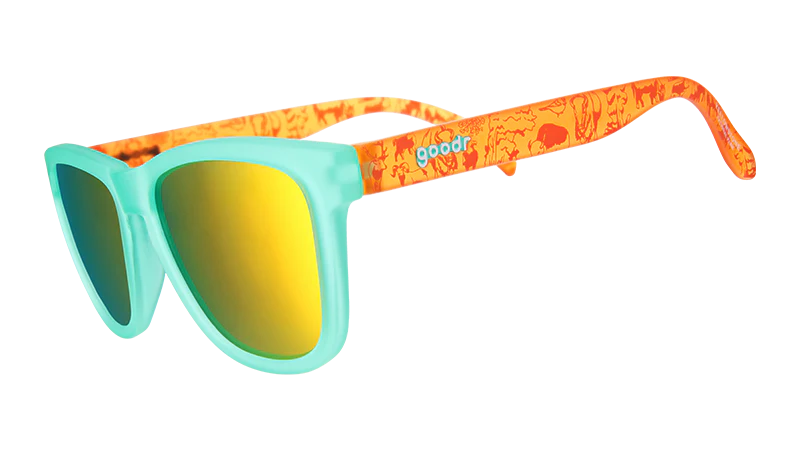
This guide focuses on the National Park Foundation sunglasses collection from goodr, which includes nine designs inspired by different parks. We'll use the Yellowstone National Park frame as a real example to help you decide which tint suits your hiking style.
Polarized vs Non-Polarized: What Hikers Need to Know
Polarized lenses cut horizontal glare from reflective surfaces like water, wet rocks, or snow. For hikers who cross streams, hike near lakes, or tackle alpine terrain, polarized lenses reduce eye strain and improve visibility in bright conditions.
Non-polarized lenses let in more ambient light and can be better for low-light trails, dense forest, or overcast days where you need every bit of available brightness. They also preserve the clarity of LCD screens on your phone or GPS watch, which some hikers prefer for navigation.
The Yellowstone National Park frame from goodr is described as good for hiking, kayaking, and climbing. While the supplied information does not specify whether the lens is polarized or non-polarized, the versatility statement suggests it handles varied outdoor conditions. If you frequently hike near water or open ridgelines, a polarized lens is worth prioritizing. For shaded canyon or forest hikes, a non-polarized lens may serve you better.
The Yellowstone National Park Frame: What the Catalog Says
- Yellowstone National Park: GOODR IS PROUD TO SUPPORT THE NATIONAL PARK FOUNDATION. Nine stunning sunnies, all inspired by a different national park. Good for hiking, kayaking, climbing, and stuffing s’mores into your face after sipping whatever beverage you put into your canteen. This confirms the frame is designed for active outdoor use, including hiking. The Teal color option adds a nature-inspired aesthetic that matches trail gear.

Yellowstone National Park
Choosing the Right Tint for Your Hiking Terrain
Gray or green lenses reduce overall brightness without distorting colors, making them a solid all-rounder for varied terrain. Brown or copper lenses enhance contrast and depth perception, ideal for uneven trails where you need to spot rocks and roots. Yellow or amber lenses boost contrast in low light but can oversaturate colors in full sun.
Because the Yellowstone National Park frame does not list a specific lens tint in the supplied information, you should check the product page for lens color details before purchasing. If you hike in mixed conditions — open meadows and shaded forest — a medium gray or brown tint gives you the best balance.
For hikers who also paddle or fish, polarized lenses with a gray or copper base are a strong choice. If you primarily hike in deep woods or at dawn/dusk, a non-polarized amber or yellow tint helps you see trail features more clearly.
Polarized vs Non-Polarized: Quick Trail Guide
- Polarized: Best for: open ridges, lakeside trails, snowfields, bright sun. Reduces glare from water and wet surfaces. May make phone screens harder to read.
- Non-Polarized: Best for: dense forest, overcast days, early morning or late afternoon hikes. Preserves natural light and screen visibility. Less effective at cutting glare.
The Trade-Off: Versatility vs Specific Performance
A single pair of sunglasses can't excel in every condition. The Yellowstone National Park frame is marketed for hiking, kayaking, and climbing, which suggests a general-purpose design. If you hike in one dominant environment — like alpine lakes or rainforest trails — you may benefit from a dedicated polarized or high-contrast tint. If you want one pair for weekend adventures across different parks, a versatile medium-tint lens (polarized or not) will serve you well.
The Teal color option adds a playful outdoor vibe, but color doesn't affect optical performance. Focus on lens specifications when you shop.

